Salmon Pink Tarantula
Scientific Name: Lasiodora parahybana
Common Name: Salmon Pink Tarantula / Salmon Pink Birdeater
Origin: Brazil, South America
Leg Span: Up to 25 cm (10 inches)
Lifespan: 12–20 years (females), 4–6 years (males)
Temperament: Generally calm but defensive if threatened
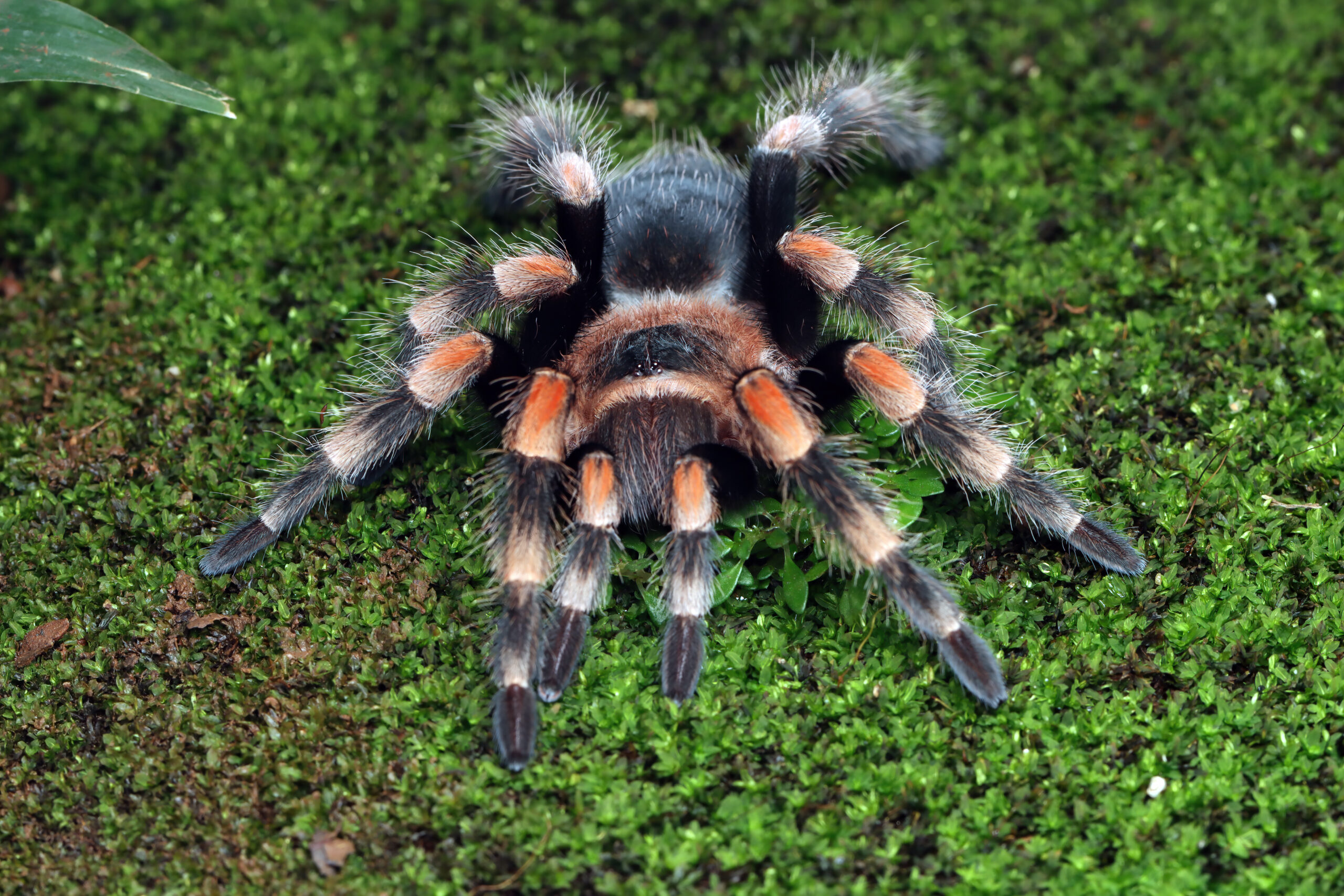
The Salmon Pink Tarantula is one of the largest tarantula species commonly kept in captivity. Known for its impressive size and striking pinkish hairs, this species is a favourite among tarantula enthusiasts.
Natural Habitat & Behaviour
In the wild, Salmon Pink Tarantulas live in the tropical regions of Brazil, where they inhabit burrows or natural shelters on the forest floor.
They are primarily terrestrial, spending most of their time on or just beneath the ground rather than climbing.
When threatened, they may flick urticating hairs from their abdomen as a defence mechanism. These hairs can irritate skin and eyes, so handling should be avoided.
Salmon Pink Tarantulas are nocturnal, becoming most active at night when they hunt for prey.
Housing & Enclosure Requirements
Salmon Pink Tarantulas require a simple terrestrial enclosure with plenty of substrate for burrowing.
Typical enclosure size:
30–45 cm (12–18 inches)
Key enclosure elements:
-
Deep substrate such as coco fibre or soil blends
-
A secure hide such as cork bark
-
Shallow water dish
-
Good ventilation
They prefer moderate humidity and temperatures around 24–28°C. Because of their size and strength, a secure enclosure lid is essential.
Diet & Nutrition
Salmon Pink Tarantulas are opportunistic predators that feed on insects and other small prey.
Common feeder insects include:
-
Crickets
-
Locusts
-
Dubia roaches
-
Mealworms or morio worms
Juveniles should be fed several times per week, while adults generally eat once every 7–10 days. As with all tarantulas, they may refuse food when preparing to moult.
Temperament & Handling
Salmon Pink Tarantulas are best considered a display species rather than a handling pet.
While they are often calm when undisturbed, they may flick urticating hairs or display a defensive posture if they feel threatened. Handling tarantulas is generally discouraged as it can stress the animal and risks injury if the spider falls.
Instead, they are best appreciated by observing their natural behaviours within a well-designed enclosure.
Is a Salmon Pink Tarantula Right for You?
Salmon Pink Tarantulas are impressive and fascinating invertebrates, but they are very different from traditional pets.
Before getting one, consider:
-
Providing a secure terrestrial enclosure
-
Avoiding unnecessary handling
-
Feeding live insects regularly
-
Long lifespans for females (up to 20 years)
For those interested in invertebrates, the Salmon Pink Tarantula is a striking and rewarding species to keep.