Do reptiles need UVB lighting?
Yes, most reptiles need UVB lighting, and all reptiles benefit from appropriate light exposure. The amount of UV they need depends on their natural behaviour, which is best understood using Ferguson Zones.

What is UV light? (UVB, UVA, UVC explained)
Sunlight contains different types of ultraviolet (UV) light:
UVA – Influences behaviour, activity, feeding, and breeding
UVB – Enables reptiles to produce vitamin D3 for calcium absorption
UVC – Harmful and filtered out by the atmosphere (not used in reptile care)
In captivity, we aim to provide UVA and UVB, safely and in the correct amounts.

Why is UVB important?
UVB allows reptiles to produce vitamin D3, which is essential for using calcium.
Without it, reptiles can develop Metabolic Bone Disease (MBD) resulting in weak or deformed bones. Other resulting health issues include poor growth and lethargy.
Its important to know that even with calcium in the diet, without UVB the body cannot use it properly.
What are Ferguson Zones?
Ferguson Zones group reptiles based on how much UV exposure they receive in the wild. This helps us provide the correct UV Index (UVI) in captivity.
Zone 1 - Shade dwellers (UVI 0–1)
Nocturnal / secretive species
Examples: Leopard geckos, many snakes
Low UVB beneficial but not essential.
Provide shaded environments with optional low-level UVB.
Zone 2 - Partial sun (UVI 1–3)
Crepuscular or occasional baskers
Examples: Boa constrictor, Monkey Tail Skinks.
Low to moderate UVB beneficial. Often overlooked, but improves long-term health.
Zone 3 - Regular baskers (UVI 2–4)
Active daytime reptiles
Examples: Bearded dragons, many lizards
UVB essential. Require consistent access to basking UV.
Zone 4 – Intense sun species (UVI 4–6+)
Open habitat specialists
Examples: Chuckwalla, Uromastyx
High UVB essential. Require strong lighting and correct setup.
What happens if UVB is wrong?
Too little UVB:
- MBD
- Weakness and deformities
Too much UVB:
- Eye and skin damage
The goal is not just “UVB”, it’s the correct level in the correct place

What is a UVB gradient in a vivarium?
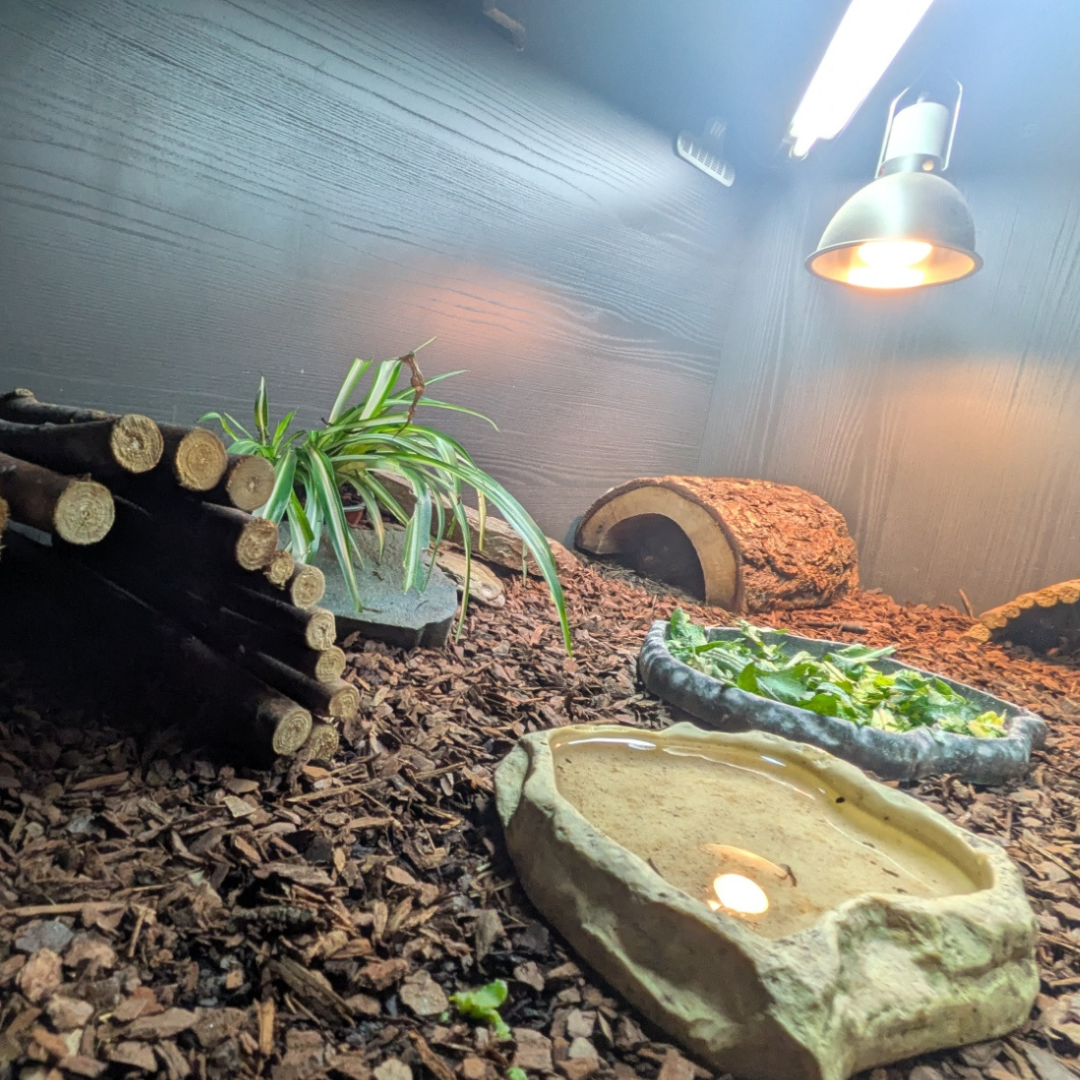
A UVB gradient means providing a range of UV exposure within the enclosure, from a higher level at the basking area to little or none in shaded zones. This allows the reptile to self-regulate its UV intake, just as it would in the wild by moving between sun and shade. The basking zone should match the species’ Ferguson Zone (target UVI at basking height), while hides and cooler areas offer low or zero UV.
Create a proper gradient;
- Position the lamp at one end of the vivarium
- Provide various distances from the UVB source
- Include cover in the form of hides, structure etc.
This will help prevent both underexposure and overexposure, supporting natural behaviour and long-term health.
UVB vs supplements
UVB = natural and self-regulating
Supplements = useful but easy to misuse
Best practice:
UVB lighting + correct supplementation
How do I provide UVB properly?
Choose UVB based on Ferguson Zone, not guesswork
Measure at basking height (distance matters)
No glass or plastic between lamp and animal
Provide shaded areas for escape
Replace bulbs regularly
Final thoughts
Most reptiles need or benefit from UVB
The correct level depends on the species
Ask in-store, we’ll match the lighting to your reptile
Does glass block UVB?
Yes, UVB does not pass through glass, tight mesh will hinder the rays too
Do all reptiles need UVB?
All benefit, but not all require high levels.
Is UVB dangerous?
Only if incorrectly installed - proper setup is safe and provision is essential. It's worth mentioning that UVA is safe and beneficial. However UVC is harmful and not used in reptile lighting—quality reptile UV lamps are designed to produce UVA and UVB only, not UVC.