Jumping Spider
Scientific Name: Various species (commonly Phidippus regius in captivity)
Common Name: Jumping Spider
Origin: Found worldwide; many pet species originate from North America
Size: 1–2 cm
Lifespan: 1–2 years
Temperament: Curious, active and visually responsive
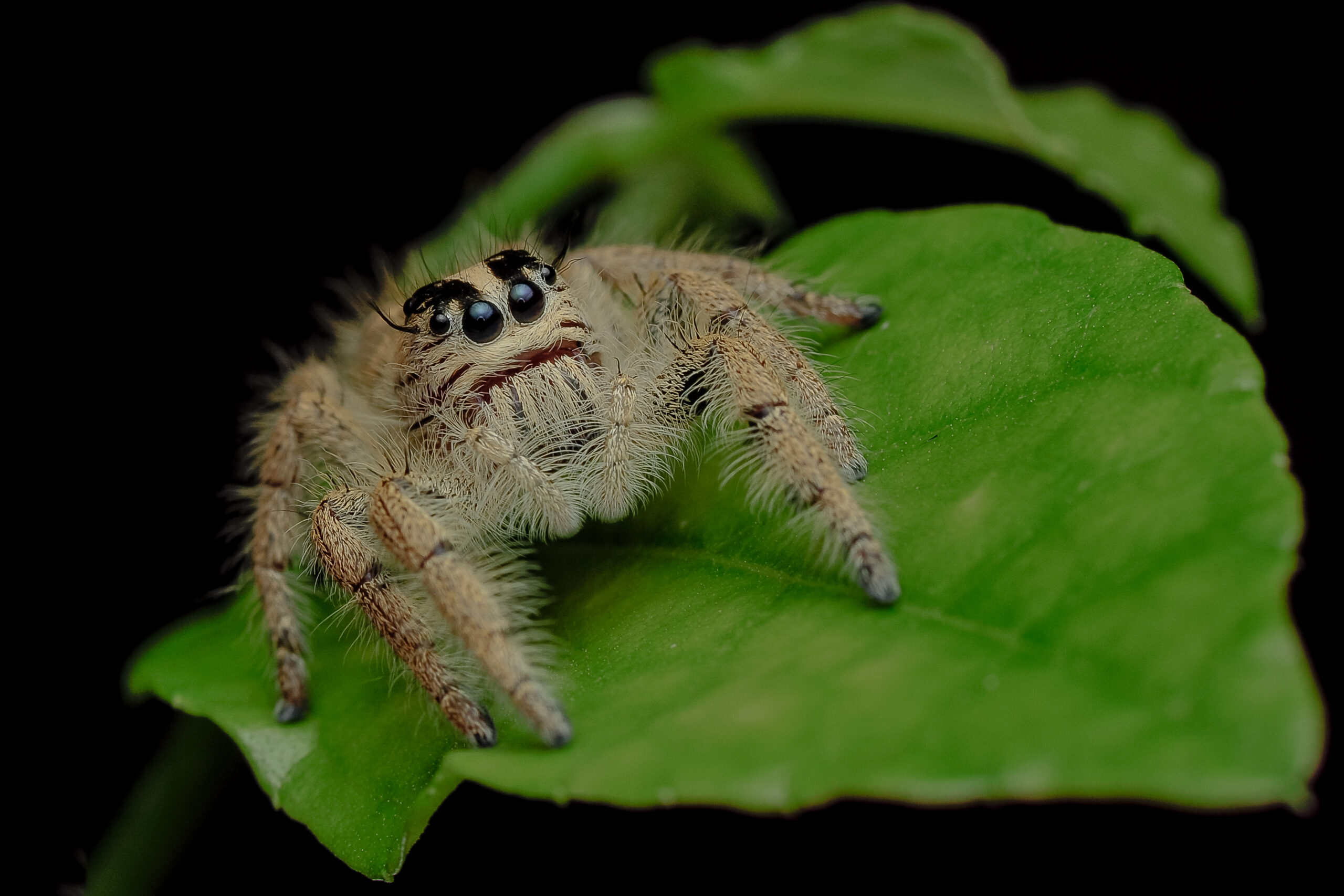
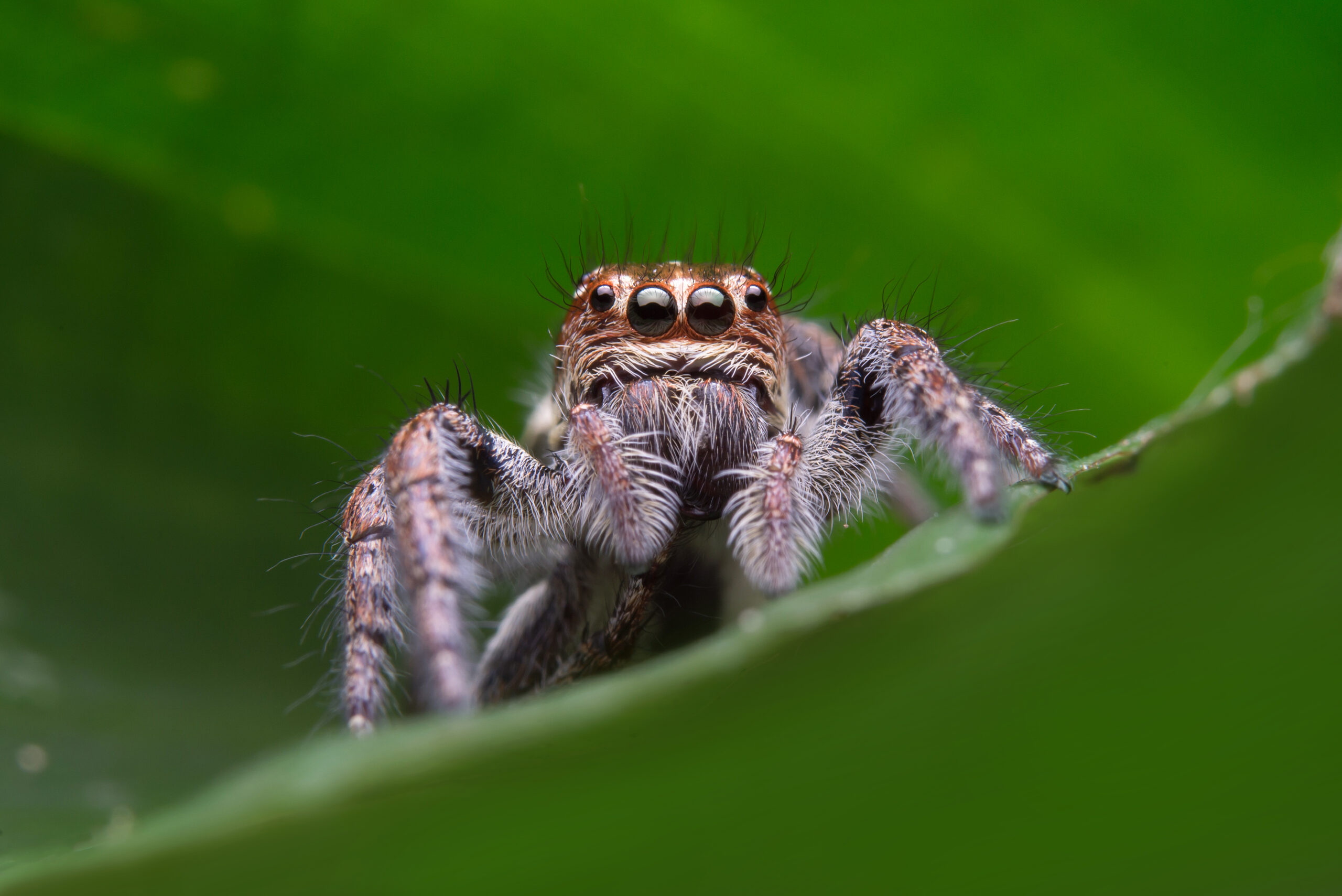
Jumping Spiders are small, intelligent spiders known for their excellent vision and energetic behaviour. Their large forward-facing eyes give them a distinctive appearance and allow them to accurately judge distance when hunting.
Housing & Enclosure Requirements
Jumping Spiders require a small, well-ventilated vertical enclosure.
Typical enclosure size:
15–20 cm tall
Key enclosure elements:
-
Vertical space for climbing and exploring
-
Decor such as cork bark, twigs or plants
-
Good ventilation to prevent stale air
-
Light misting occasionally for hydration
They tend to build small resting hammocks near the top of the enclosure, so it is best to avoid frequently opening the lid if the enclosure opens from above.
Diet & Nutrition
Jumping Spiders feed on small live insects.
Common feeder insects include:
-
Fruit flies (ideal for spiderlings)
-
Small crickets
-
Green bottle flies
-
Small roaches
Most adults eat every 2–3 days, depending on size and appetite. Because they are visual hunters, prey movement is important to trigger a feeding response.
Temperament & Handling
Jumping Spiders are often described as curious and interactive compared to many other invertebrates.
They frequently observe movement around them and may turn to face people nearby. Some keepers choose to gently allow them to walk onto their hand, although handling should always be done carefully and close to a surface.
Because of their small size and delicate bodies, they should never be forced to interact.
Is a Jumping Spider Right for You?
Jumping Spiders can make fascinating and rewarding pets for those interested in invertebrates.
Before getting one, consider:
-
Providing a secure, well-ventilated enclosure
-
Feeding small live insects regularly
-
Avoiding rough handling due to their delicate size
-
Their relatively short lifespan of 1–2 years
For many keepers, their curious behaviour, expressive appearance and active hunting style make Jumping Spiders one of the most engaging small invertebrates