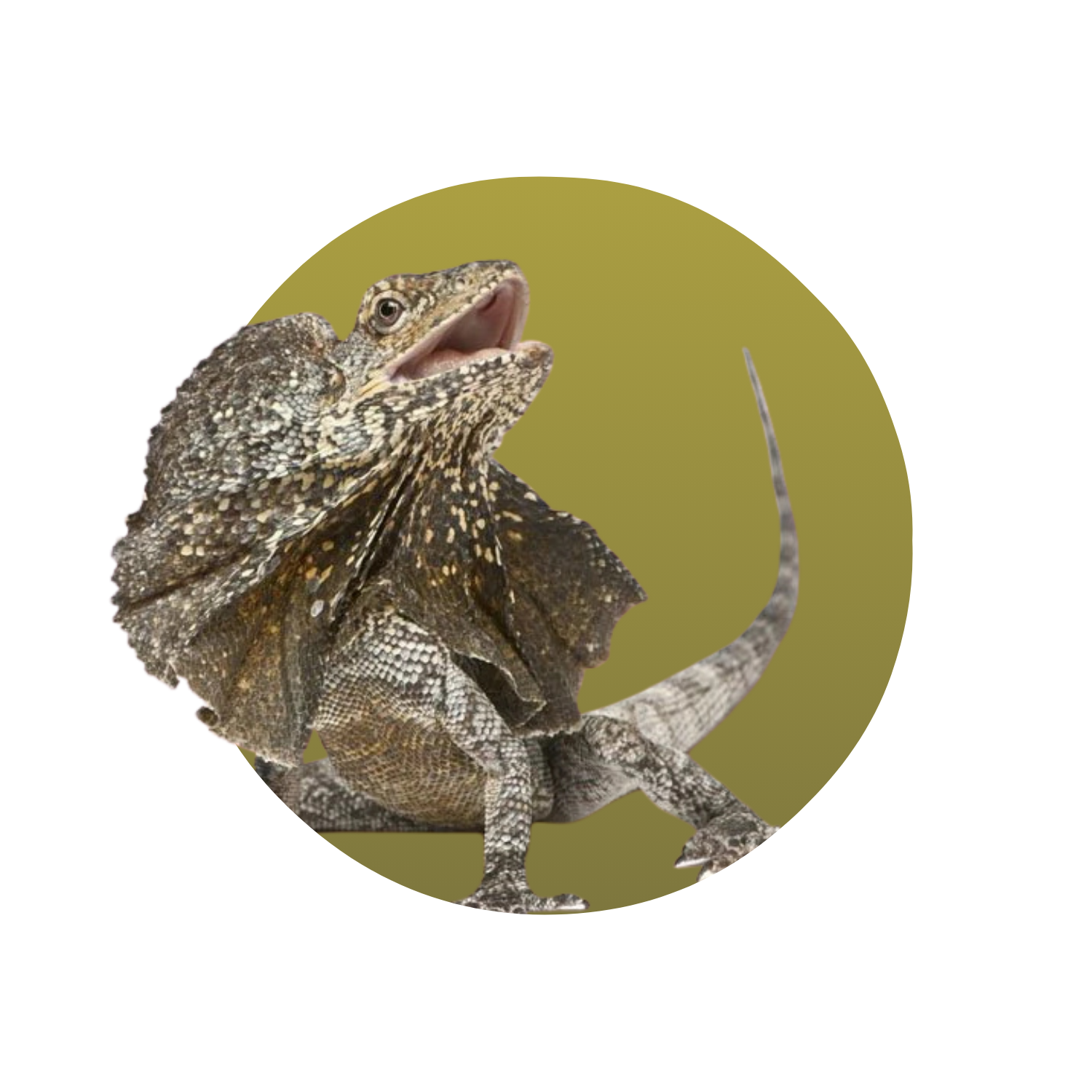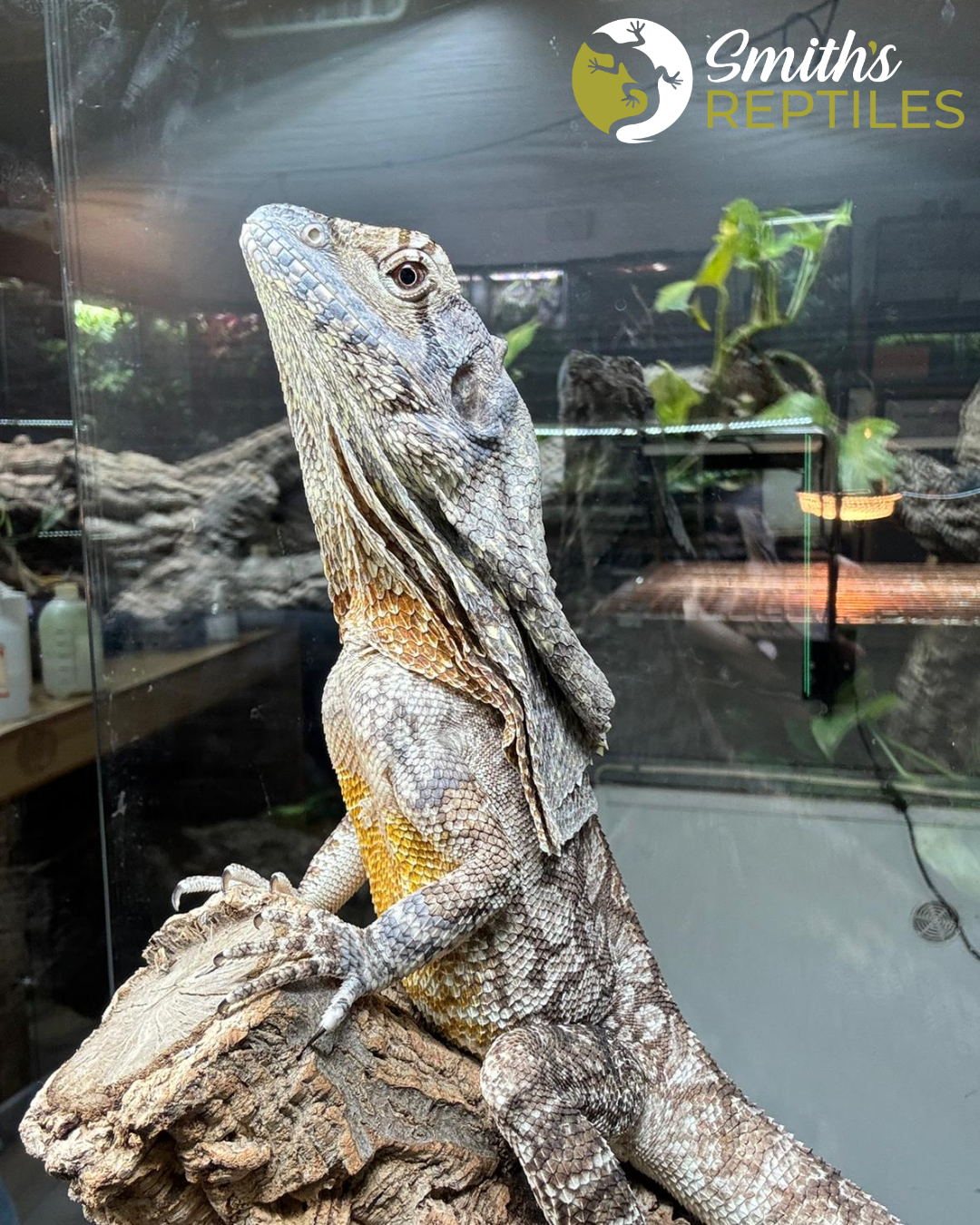
Frilled Lizard
Scientific Name: Chlamydosaurus kingii
Common Name: Frilled Lizard / Frill-Necked Lizard
Origin: Northern Australia and New Guinea
Adult Size: 60–90 cm (24–35 inches) including tail
Lifespan: 10–15 years
Temperament: Active, alert display species
Frilled Lizards are one of the most distinctive reptiles in the world, famous for the large frill around their neck which they expand when threatened.
Housing & Enclosure Requirements
Frilled Lizards require a large, tall enclosure with plenty of climbing opportunities.
Minimum enclosure size (adult):
180 × 90 × 180 cm (6 × 3 × 6 ft)
Key enclosure elements:
-
Strong UVB lighting
-
Basking area: around 35–40°C
-
Cooler areas around 24–28°C
-
Tall branches and climbing structures
-
Hides and foliage for security
Because they are active climbers, vertical space is particularly important.
Diet & Nutrition
Frilled Lizards are primarily insectivores, feeding on a range of live prey. Common feeder insects include:
-
Locusts
-
Crickets
-
Dubia roaches
-
Occasional worms
Some individuals may also eat small amounts of vegetables or fruit. Calcium and vitamin supplementation is important to support healthy growth and bone development.
Temperament & Handling
Frilled Lizards are best considered a display species.
While some individuals may tolerate gentle interaction, they are generally more comfortable when left to explore and bask within their enclosure.
Observing their natural behaviours, including climbing, basking and hunting, is often the most rewarding aspect of keeping this species.
Is a Frilled Lizard Right for You?
Frilled Lizards are impressive reptiles but require specialised care and a large enclosure.
Prospective keepers should be prepared to:
-
Provide a tall, spacious habitat with strong lighting
-
Maintain warm temperatures and proper UVB
-
Feed a regular diet of live insects
-
Commit to long-term care of 10–15 years
For experienced reptile keepers, Frilled Lizards can be fascinating and highly rewarding reptiles to observe and care for.