Praying Mantis
Scientific Name: Various species (commonly Hierodula, Sphodromantis, and Mantis spp.)
Common Name: Praying Mantis
Origin: Grasslands, forests, and tropical regions worldwide
Adult Size: 5–12 cm (2–5 inches), depending on species
Lifespan: 6–18 months
Temperament: Solitary, alert, and fascinating to observe
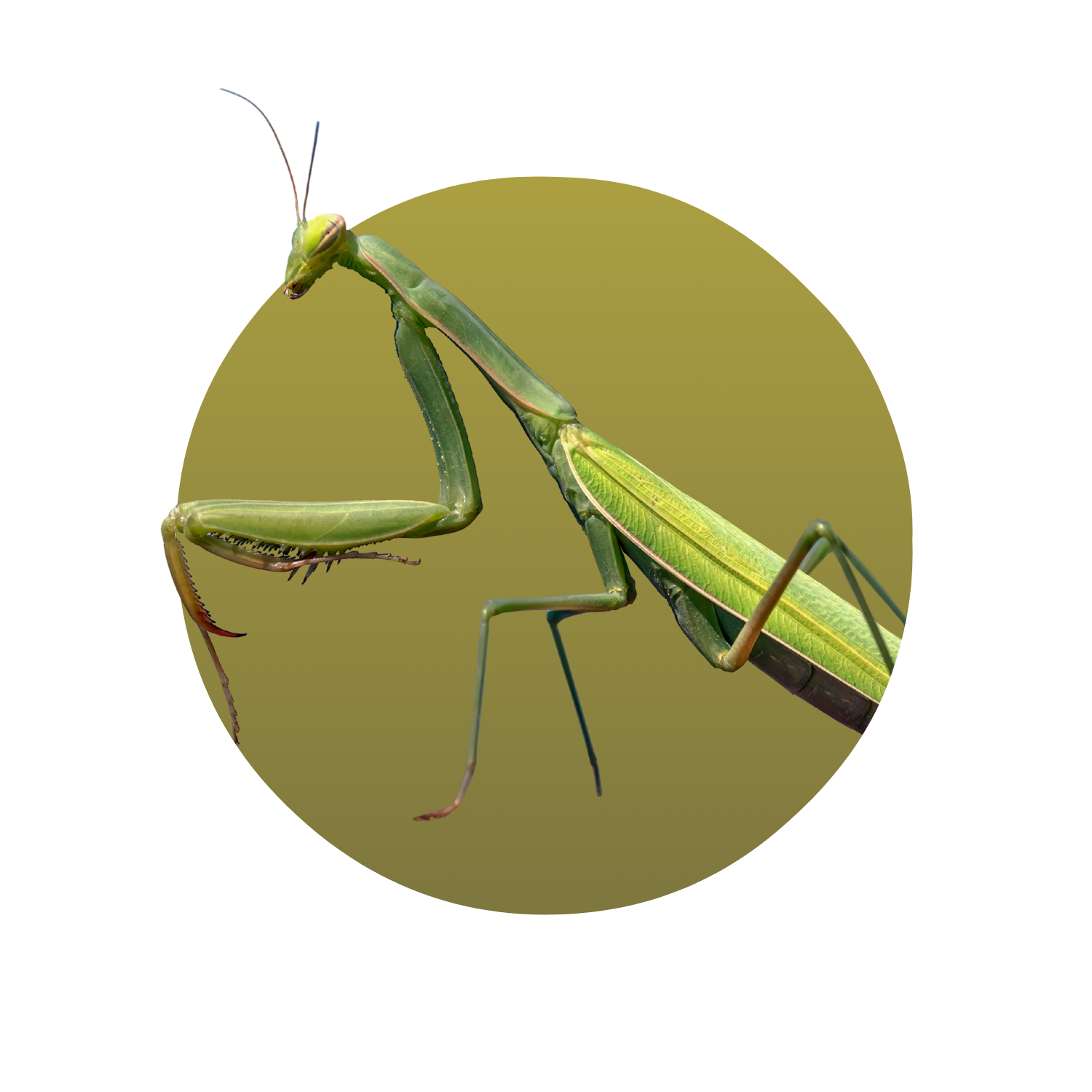
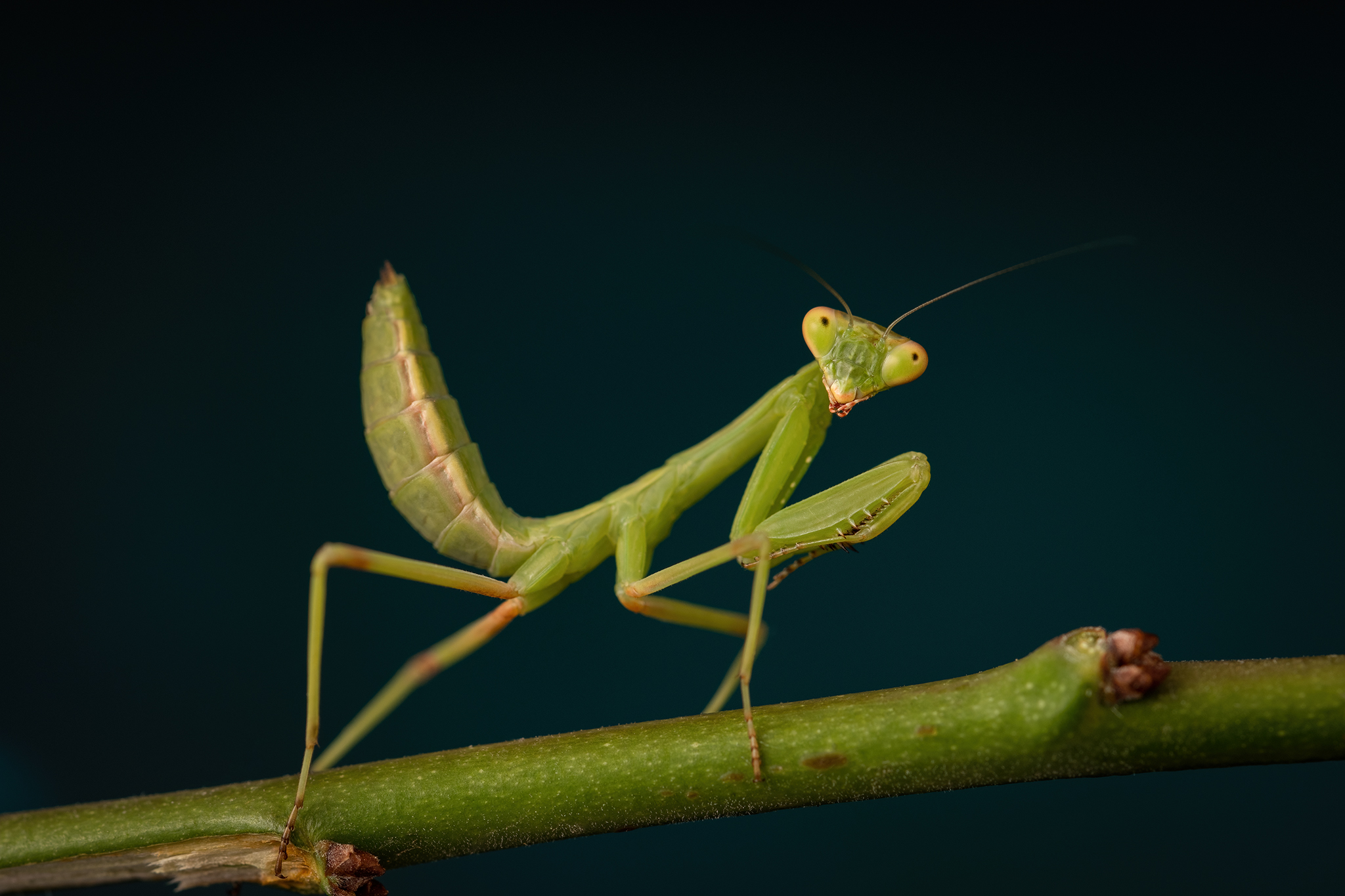
Praying Mantises are among the most captivating insects in the animal kingdom. Famous for their distinctive folded front legs and patient hunting technique, these remarkable predators are highly skilled ambush hunters that rely on stealth, speed, and precision to catch their prey.
Their graceful movements, curious nature, and unique appearance make them popular among invertebrate enthusiasts and an excellent choice for anyone interested in observing natural hunting behaviours up close.
Housing & Enclosure Requirements
Praying Mantises require a well-ventilated enclosure with sufficient height for climbing and moulting.
Minimum enclosure size:
At least three times the mantis' body length in height and twice its body length in width.
Key enclosure elements:
- Tall enclosure with good ventilation
- Twigs and branches for climbing
- Artificial or live plants for cover
- Appropriate temperatures between 22–28°C
- Moderate humidity levels (species dependent)
- Light misting as required
- Secure enclosure to prevent escapes
Adequate height is essential, as mantises need space to hang upside down when shedding their exoskeleton.
Diet & Nutrition
Praying Mantises are carnivorous and feed exclusively on live prey.
Common food items include:
- Fruit flies
- Green bottle flies
- Crickets
- Locusts
- Roaches
- Other appropriately sized insects
Food should be sized appropriately for the mantis, and fresh water is usually provided through regular misting and water droplets on enclosure surfaces.
Temperament & Handling
Praying Mantises are generally calm insects but are best appreciated as display animals.
They are:
- Solitary by nature
- Alert and highly observant
- Curious about movement
- Gentle when handled carefully
While some mantises tolerate occasional handling, they are delicate creatures and should only be handled when necessary.
Watching a mantis stalk and capture prey is often one of the most fascinating aspects of keeping these insects.
Appearance & Adaptations
Praying Mantises are perfectly adapted predators with a range of remarkable features.
Key characteristics include:
- Large triangular head
- Highly mobile neck capable of turning nearly 180 degrees
- Powerful raptorial front legs for catching prey
- Excellent eyesight
- Camouflaged body shape and colouration
Depending on the species, mantises may be green, brown, tan, or even brightly coloured to blend into leaves, bark, flowers, or other natural surroundings.
Life Cycle & Development
Praying Mantises undergo incomplete metamorphosis and grow through a series of moults.
Their life cycle typically includes:
- Egg stage (ootheca)
- Juvenile nymph stages
- Multiple moults as they grow
- Adult stage
After reaching adulthood, many species develop fully formed wings, although not all species are strong fliers.
Successful moulting is essential for healthy development, making enclosure setup and humidity particularly important.
Is a Praying Mantis Right for You?
Praying Mantises are an excellent choice for keepers interested in unique insect behaviour and natural predation.
Prospective keepers should be prepared to:
- Provide a suitably sized enclosure with climbing opportunities
- Feed live insects regularly
- Maintain appropriate temperature and humidity levels
- Handle carefully and only when necessary
- Monitor moulting and overall health
With their extraordinary hunting abilities, elegant movements, and fascinating behaviour, Praying Mantises are truly remarkable insects that offer endless opportunities for observation and discovery. They make a unique and rewarding addition to any invertebrate collection.