Thai Forest Scorpion
Scientific Name: Heterometrus spp.
Common Name: Thai Forest Scorpion
Origin: Thailand and Southeast Asia
Adult Size: 10–15 cm (4–6 inches)
Lifespan: 5–8 years
Temperament: Generally calm, defensive when threatened, and best suited as a display species
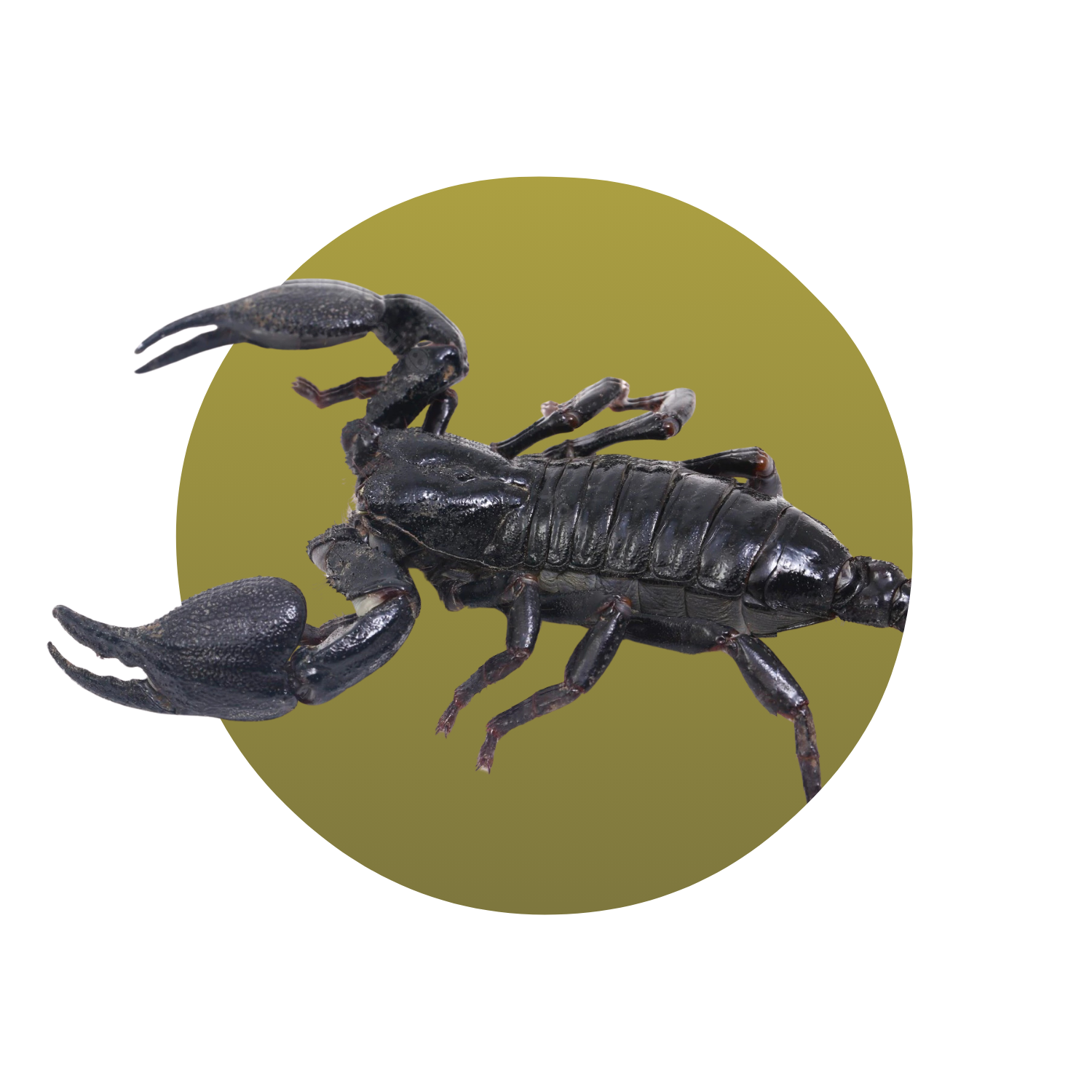
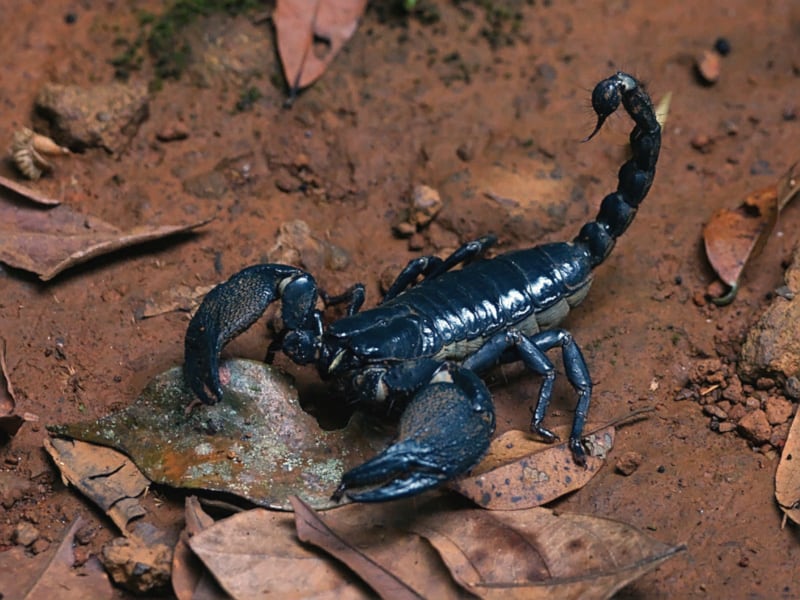
The Thai Forest Scorpion is a striking arachnid admired for its glossy black exoskeleton, impressive pincers, and fascinating behaviour. Native to the humid forests of Southeast Asia, these scorpions spend much of their time exploring, burrowing, and waiting patiently for prey.
Although they have an intimidating appearance, Thai Forest Scorpions are typically more reliant on their powerful pincers than their sting for defence. Their active nature and captivating behaviours make them a popular choice for invertebrate enthusiasts looking for an unusual and rewarding display animal.
Housing & Enclosure Requirements
Thai Forest Scorpions thrive in warm, humid environments that replicate their natural forest habitat.
Minimum enclosure size (adult):
30 × 30 × 30 cm (12 × 12 × 12 inches)
Larger enclosures can provide additional enrichment and exploration opportunities.
Key enclosure elements:
- Deep substrate for burrowing
- Hides such as cork bark or caves
- Temperatures between 24–28°C
- Humidity maintained between 70–85%
- Shallow water dish
- Good ventilation
- Secure escape-proof enclosure
A slightly damp substrate helps maintain humidity levels and encourages natural burrowing behaviour.
Diet & Nutrition
Thai Forest Scorpions are carnivorous predators that feed on a variety of live invertebrates.
Common food items include:
- Crickets
- Locusts
- Roaches
- Mealworms
- Other appropriately sized insects
Adults are typically fed once or twice per week, while younger scorpions may require more frequent feeding.
Fresh water should always be available.
Temperament & Handling
Thai Forest Scorpions are best regarded as an observation species.
They are:
- Generally calm when undisturbed
- Primarily nocturnal
- Defensive if threatened
- Fascinating to observe hunting and exploring
Handling is not recommended. While their venom is considered relatively mild compared to many scorpion species, they can still sting if they feel threatened, and their powerful pincers can deliver a painful pinch.
For both keeper and animal welfare, they are best appreciated within their enclosure.
Appearance & Characteristics
Thai Forest Scorpions are among the most visually impressive scorpion species commonly kept in captivity.
Key features include:
- Glossy black or dark brown exoskeleton
- Large, powerful pincers
- Thick tail ending in a venomous stinger
- Robust body shape
- Strong burrowing ability
Their intimidating appearance often surprises new keepers, but much of their behaviour is calm and deliberate when housed appropriately.
Behaviour & Activity
Thai Forest Scorpions are primarily nocturnal and become most active after dark.
Natural behaviours include:
- Exploring their enclosure
- Digging and maintaining burrows
- Ambushing prey
- Resting beneath hides during the day
Providing plenty of shelter allows them to feel secure and display more natural behaviours.
Is a Thai Forest Scorpion Right for You?
Thai Forest Scorpions are an excellent choice for keepers interested in fascinating invertebrates and natural predator behaviours.
Prospective keepers should be prepared to:
- Maintain a warm, humid enclosure
- Feed live insects regularly
- Provide deep substrate and suitable hiding places
- Avoid unnecessary handling
- Commit to several years of care
With their impressive appearance, intriguing behaviours, and relatively straightforward care requirements, Thai Forest Scorpions make captivating display animals and a rewarding addition to an invertebrate collection.