Red Eyed Tree Frog
Scientific Name: Agalychnis callidryas
Common Name: Red-Eyed Tree Frog
Origin: Central America
Adult Size: 5–7 cm (2–3 inches)
Lifespan: 5–10 years
Temperament: Shy, nocturnal display species
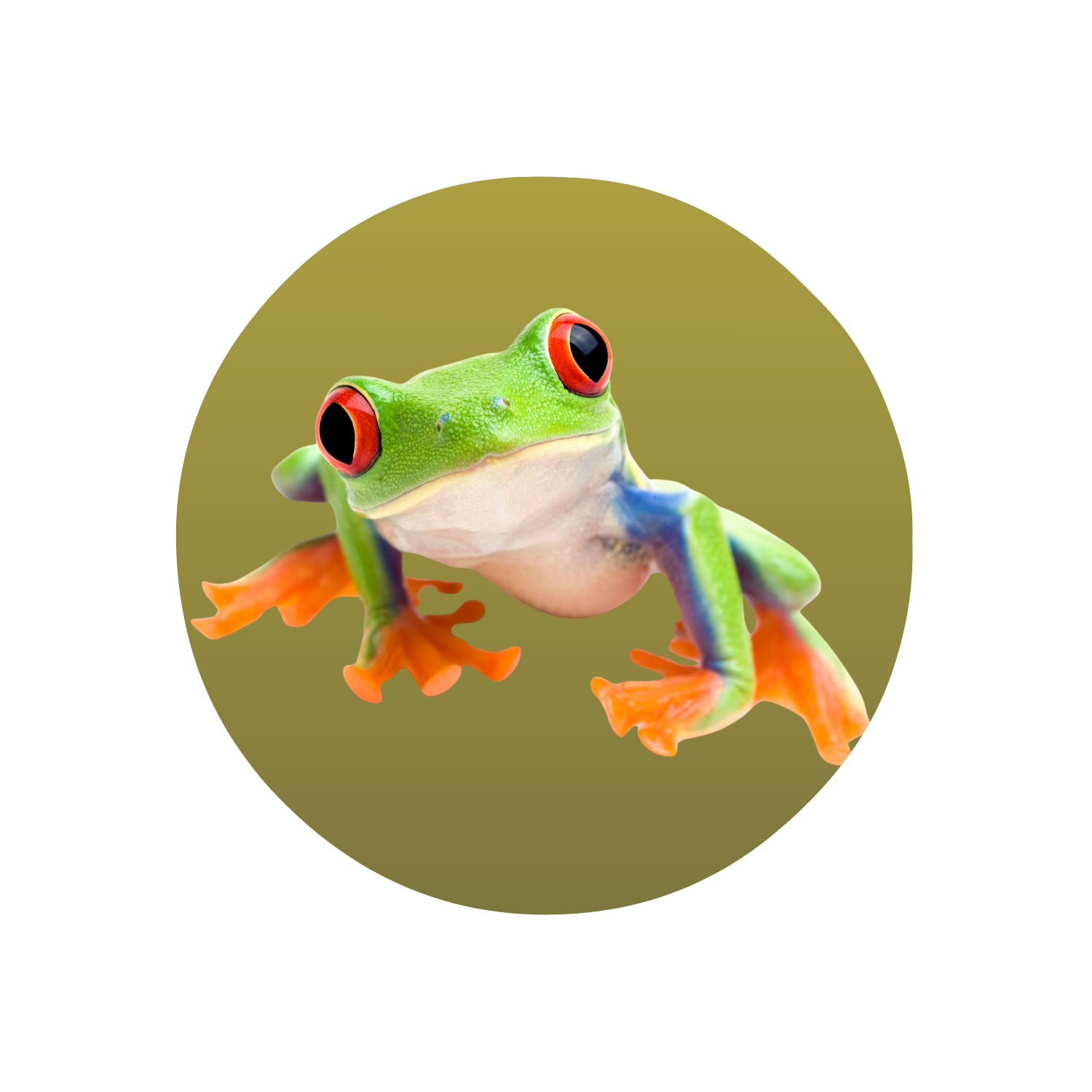
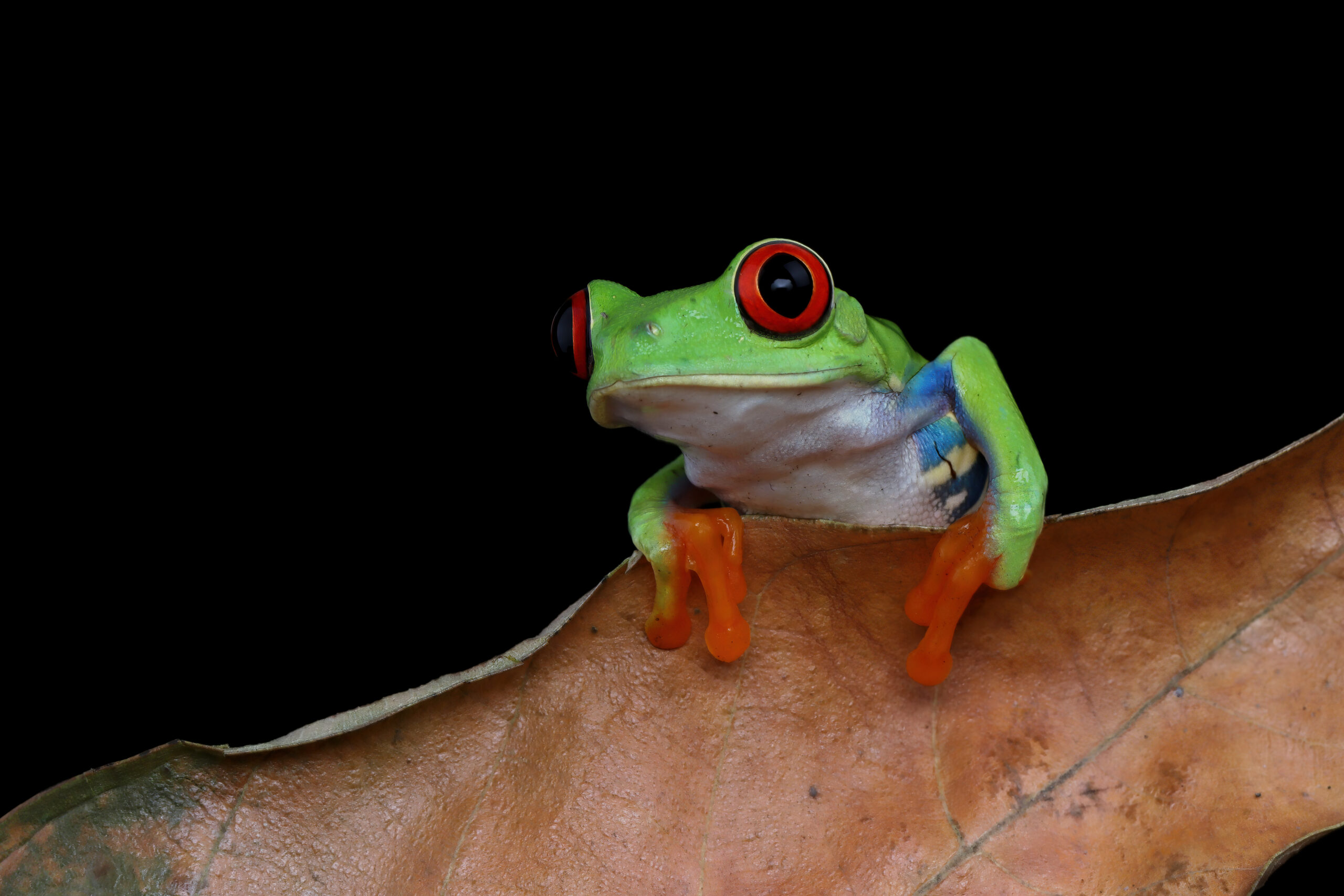
Red-Eyed Tree Frogs are one of the most recognisable amphibians in the world, famous for their bright red eyes, vibrant green bodies and blue-and-yellow sides.
Natural Habitat & Behaviour
In the wild, Red-Eyed Tree Frogs live in the humid tropical rainforests of Central America, where they spend most of their time in trees and dense vegetation.
They are nocturnal, meaning they are most active at night. During the day they usually sleep on leaves with their eyes closed and legs tucked in, blending into their surroundings.
At night they become active hunters, moving through branches and plants searching for insects.
Housing & Enclosure Requirements
Red-Eyed Tree Frogs require a tall, humid tropical enclosure that mimics a rainforest environment.
Typical enclosure size:
45 × 45 × 60 cm (18 × 18 × 24 inches)
Key enclosure elements:
-
Vertical space for climbing
-
Live or artificial plants and branches
-
High humidity (60–80%)
-
Temperatures: around 24–28°C
-
Shallow water area
Regular misting helps maintain humidity and supports the frogs’ sensitive skin.
Diet & Nutrition
Red-Eyed Tree Frogs are insectivores, feeding on small live insects.
Common feeder insects include:
-
Crickets
-
Small locusts
-
Fruit flies (for juveniles)
-
Small roaches
Most adult frogs eat every 2–3 days. Calcium and vitamin supplements should be used regularly to maintain good health.
Temperament & Handling
Red-Eyed Tree Frogs are best kept as a display species.
Handling should be kept to a minimum because amphibians have delicate skin that can absorb oils and chemicals from human hands.
Instead, they are best appreciated by observing their natural behaviours within a well-planted tropical enclosure.
Is a Red-Eyed Tree Frog Right for You?
Red-Eyed Tree Frogs are fascinating amphibians but require the correct environment to thrive.
Prospective keepers should be prepared to:
-
Maintain high humidity levels
-
Provide a tall, planted enclosure
-
Feed live insects regularly
-
Limit handling to reduce stress
For those interested in tropical amphibians, Red-Eyed Tree Frogs are a striking and rewarding species to observe.