Leopard Tortoise
Scientific Name: Stigmochelys pardalis
Common Name: Leopard Tortoise
Origin: Eastern and Southern Africa
Adult Size: 35–45 cm (14–18 inches)
Lifespan: 50–80+ years
Temperament: Generally calm and active
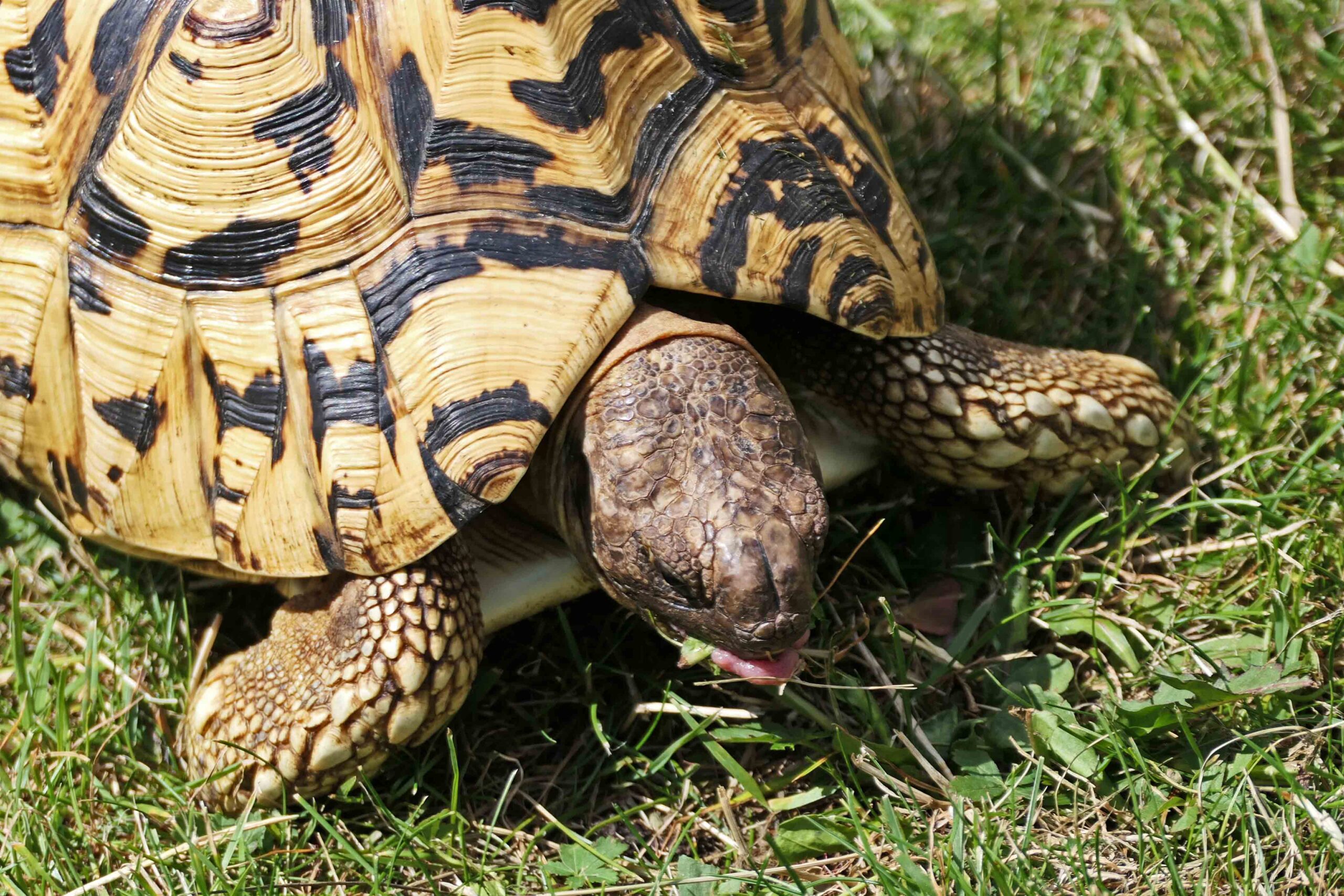
Leopard Tortoises are one of the largest tortoise species commonly kept in captivity, recognised for their striking spotted shell pattern that resembles the markings of a leopard.
Housing & Enclosure Requirements
Leopard Tortoises require large, secure enclosures, particularly as they grow.
Housing considerations:
-
Outdoor enclosure in warm weather with grazing space
-
Indoor heated enclosure for cooler climates
-
Basking area: around 32–35°C
-
Cooler areas for temperature regulation
-
Shelters or hides for security
Because of their size and activity levels, they benefit greatly from spacious outdoor environments when temperatures allow.
Diet & Nutrition
Leopard Tortoises are strict herbivores, feeding primarily on grasses and fibrous plants. A healthy diet should include:
-
Grasses and hay
-
Dandelion leaves
-
Plantain and other wild weeds
-
Leafy greens
Their diet should be high in fibre and low in protein, closely replicating the plants they would consume in the wild. Calcium supplementation is important to support healthy shell growth.
Temperament & Handling
Leopard Tortoises are generally calm and inquisitive reptiles. They may become familiar with their keeper and often approach when food is offered.
While they tolerate gentle interaction, they are best enjoyed by observing their natural behaviours as they move around and graze.
Due to their size and lifespan, they should always be considered a long-term commitment.
Is a Leopard Tortoise Right for You?
Leopard Tortoises can be impressive and rewarding reptiles but require significant space and long-term care.
Prospective keepers should be prepared to:
-
Provide a large enclosure with room to roam
-
Maintain warm temperatures year-round
-
Offer a high-fibre plant-based diet
-
Commit to a lifespan that can exceed 50 years
With the correct care and environment, Leopard Tortoises can become fascinating and long-lived reptile companions.