Can Reptiles Overheat in a Heatwave?
When the UK suddenly jumps from grey skies to 28°C in a couple of days, one of the most common questions we get asked is: "Will my reptile be okay in this weather?"
The short answer is, they can be, but hot weather can become dangerous very quickly if temperatures inside the enclosure are not monitored properly.
A lot of reptile and amphibian setups are designed to hold heat efficiently throughout the year. That is normally a good thing in the UK, but during a heatwave it can mean temperatures climb much higher than expected. The good news is that most overheating problems are preventable once you know what to look out for.
When should you start worrying about temperatures?
Before your reptile or amphibian starts showing obvious signs of stress.
If your room is:
- reaching the mid to high 20s
- holding heat late into the evening
- getting strong direct sunlight
- feeling stuffy or poorly ventilated
…it is worth checking temperatures more frequently and making adjustments early.
One of the biggest problems during UK heatwaves is that temperatures can slowly creep up throughout the day without people realising. Vivariums naturally hold heat, especially glass enclosures, so even a setup that is normally perfect can suddenly become too warm during extreme weather.
What signs can suggest an enclosure is too hot?
Some reptiles and amphibians will show signs that they are struggling with heat, although by this point temperatures may already have been too high for a while.
Things to watch for include:
- lethargy or reduced activity
- unusual behaviour
- reptiles breathing more heavily than normal
- constant soaking or sitting in the water bowl
- animals staying out in exposed areas
- amphibians appearing weak or unresponsive
These signs do not always mean overheating specifically, but they are a strong indication that temperatures should be checked immediately.
Amphibians can be especially difficult because many species deteriorate very quickly without much warning.
Why do vivariums get so hot in summer?
Most vivariums are designed to retain warmth, which is perfect for much of the year.
But during a heatwave, especially in rooms with poor airflow or strong sunlight, they can trap excess heat surprisingly quickly.
Glass enclosures in particular can act a bit like greenhouses. Add direct sunlight through a window and temperatures can rise much faster than many keepers expect.
Even setups that are normally spot-on throughout the year can struggle during unusually hot weather.
What is the best way to keep a vivarium cool?
Usually, cooling the room itself makes the biggest difference.
Portable air conditioning units are one of the most effective options because they actively reduce ambient temperatures rather than just moving warm air around.
Fans can still help by improving airflow and preventing heat building up in stagnant areas.
Other simple things that help include:
- closing blinds or curtains during the hottest part of the day
- keeping enclosures away from direct sunlight
- improving ventilation safely where possible
- reducing unnecessary heat sources nearby
How often should I check temperatures during a heatwave?
More often than usual as temperatures can change a lot throughout the day, especially in the afternoon when rooms tend to peak in heat.
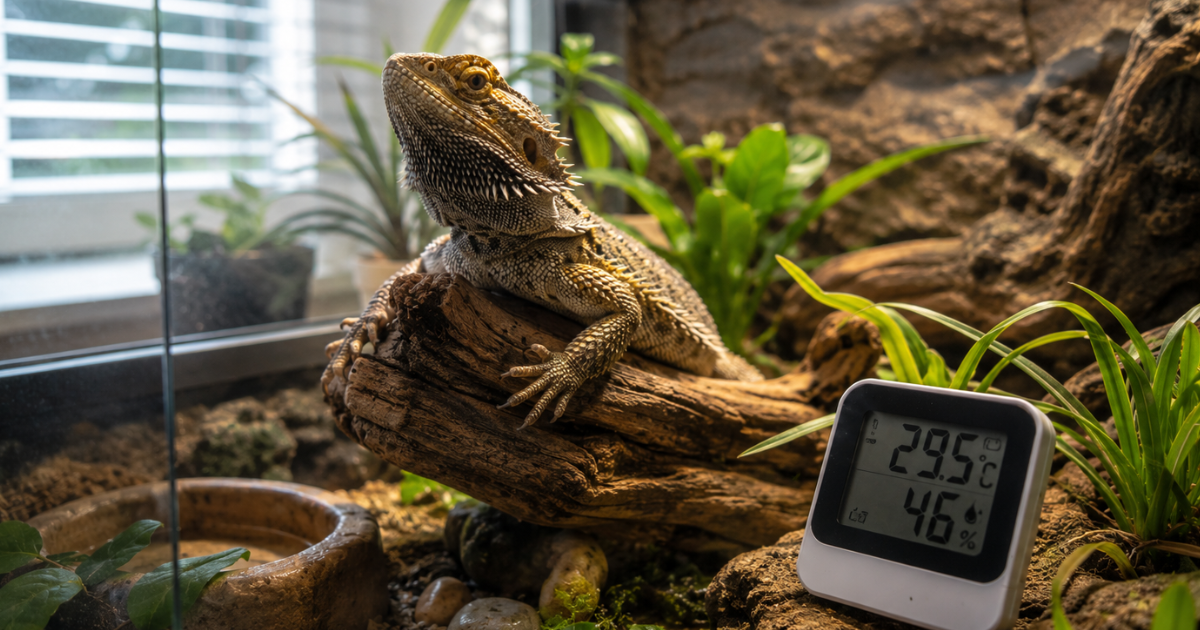
Digital thermometers with probes are ideal because they give a much clearer picture of what is happening inside the enclosure. High temperature alarms can also be incredibly useful if your thermostat has that feature built in.
It is always worth checking again during the hottest part of the day rather than assuming everything is still fine from the morning.
Should I turn my reptile heating off in hot weather?
Sometimes, yes, many keepers reduce thermostat settings during heatwaves, and in some setups non-essential heating may not need to run during the daytime at all.
This depends on:
- the species
- the room temperature
- the enclosure type
- how warm the enclosure is naturally becoming
The important thing is adjusting based on actual temperatures rather than sticking rigidly to normal settings during extreme weather. Night-time temperatures may still need some support depending on the species and your home environment.
Are amphibians more at risk in hot weather?
Generally, yes.
Amphibians are much more sensitive to heat and dehydration than most reptiles. Warm temperatures can also affect oxygen levels and water quality in aquatic or semi-aquatic setups.
One of the tricky things with amphibians is that they often do not show obvious warning signs until they are already struggling.
That is why stable temperatures and close monitoring become especially important during hotter periods.
Should I use ice or cold water to cool the enclosure quickly?
No, sudden dramatic temperature changes can create stress as well. It is much safer to cool things gradually and stabilise the environment properly.
The aim is not to make the enclosure cold - it is to stop it becoming dangerously hot.
Improving airflow, lowering room temperature and adjusting heating sensibly are normally far safer and more effective approaches.
What is the most important thing during a heatwave?
Monitoring.
Most heat-related issues happen when temperatures quietly creep up throughout the day without being noticed.
Checking temperatures regularly, adjusting heating where needed and focusing on room temperature can make a huge difference.
A little extra attention during hot weather goes a long way towards keeping reptiles and amphibians safe and comfortable through the summer months.